
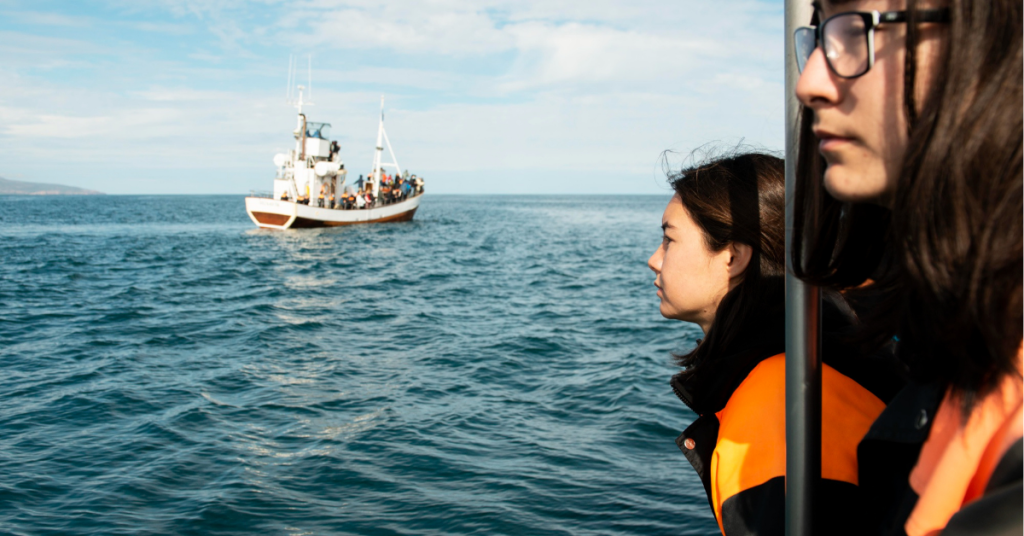
In Hawaiʻi, boating is a way of life. Whether you are heading out on the water for fun, for a commercial charter, to go fishing, or to get between islands, the ocean plays a central role in both daily life and tourism across all Hawaiian islands. Unfortunately, boating accidents happen far more often than many people realize.
One of the challenges in boating accident cases is determining what law applies. Federal maritime law applies to accidents that occur on navigable waters, such as the ocean. State law applies to smaller waterways, such as lakes and rivers that do not connect to larger waterways. Our Hawaiʻi boating accident lawyers will thoroughly analyze your case and work to get you the maximum compensation for your injuries, regardless of which laws apply to your claim.
At Miyashita & O’Steen, we are fierce advocates for clients who have been hurt in all types of accidents in Hawaiʻi, including car accidents, recreational activity accidents, and boating and jet skiing accidents. We use our experience and knowledge of both Hawaiian and maritime law to get our clients the best possible outcome for their case. Contact our law offices today to schedule a free consultation with a Honolulu personal injury attorney.
What Is Maritime Law?
Maritime law, or admiralty law, is a body of federal law that governs activities on navigable waters. It was developed to create uniform rules for maritime commerce and navigation, based on the unique risks of these activities. Under the U.S. Constitution, all maritime and admiralty cases are under the jurisdiction of the United States federal courts.
There is a common misconception that maritime law only applies to things like shipping vessels. However, maritime law can also apply to many personal injury cases involving boats and other small watercraft.
The difference between state law and federal maritime law can be important when it comes to personal injury cases. There are different rules when it comes to:
- Liability or fault
- Statutes of limitations (time limit for filing a personal injury claim)
- Defenses
- Available damages (compensation)
If you are hurt in a boating accident in Hawaiʻi, maritime law may come into play, depending on several key factors. Our Honolulu boat accident attorneys will thoroughly analyze your case, determine which laws apply, and fight to get you maximum compensation for your injuries.
When Does Maritime Law Apply to Boating Accidents?
Courts typically look at two things when deciding whether maritime law applies to a boating accident: the location of the accident and the connection to maritime activity. Based on this analysis, a boating accident claim may be brought under federal maritime law or state personal injury law.
First, courts look at the location of the accident. Specifically, if the accident occurs on navigable waters, maritime law may apply. Navigable waters are bodies of water that are subject to tides or are used for transporting items in interstate or foreign commerce.
In Hawaiʻi, the Pacific Ocean, coastal waters surrounding the islands, and any bays, harbors, or channels used for interstate or commercial navigation would be considered navigable waters. Most boating accidents that occur off Hawaiʻi’s shores meet this requirement.
Maritime law does not apply to accidents that occur outside of navigable waters. This may include accidents that happen entirely on land, on smaller lakes or ponds that are not connected to navigable waters, or in swimming pools or enclosed water attractions. For example, a boating accident at the Wahiawā Reservoir would probably fall under state law rather than federal maritime law.
Even if a boating accident occurred on navigable waters, there is a second part of the test: connection to maritime activity. To fall under federal law, the incident must have a substantial relationship to traditional maritime activity.
Courts will consider whether the accident involves a vessel, affects maritime commerce or navigation, and arises from activities commonly associated with boating or seafaring. This could include many types of boating activities, including commercial fishing, jet skiing, charter tours, sailing, recreational boating, and transporting passengers or goods by water.
Maritime law is not limited to commercial vessels. Recreational boating accidents can and do fall under federal maritime law. This can include incidents such as:
- Collisions between boats
- Falls on decks due to unsafe conditions
- Jet ski accidents on open water
- Passengers injured while boarding or exiting a boat
- Accidents involving tour or charter boats
- Boating accidents caused by intoxicated operators
The question of what law applies to a particular case is very fact-based. If an accident occurs on navigable waters and involves maritime activities, federal maritime law may apply, even if everyone involved in the accident is a private individual.
State law can still apply to boating accident cases. In some situations, Hawaiʻi personal injury law may supplement maritime law. This is particularly true when federal maritime law does not address a certain issue, such as how damages are calculated or local safety regulations. If federal and state law are in conflict, however, federal law usually controls.
If this all seems confusing, you are not alone. Fortunately, our Honolulu boat accident attorneys can determine which laws apply and fight to get you the compensation that you deserve.
How Are Maritime Laws Different?
Even if your boating accident case falls under maritime law, you can still recover financial compensation for your injuries. Just like under Hawaiʻi personal injury law, a boat operator can be held responsible for negligent (careless), reckless, or intentional behavior. This can include things like speeding, operating under the influence, ignoring weather conditions, or failure to follow navigation rules.
Depending on the facts of the case, the boat operator, the vessel owner, a charter company, a maintenance contractor, or a tour operator can be held responsible for your injuries. Under both federal and state law, you can bring a claim against multiple parties when more than one person may be responsible for an accident.
If you can prove that the at-fault party (defendant) caused your injuries, then you may be able to recover money for your losses. This may include compensation for things like your medical bills, lost wages, reduced earning capacity, pain and suffering, emotional distress, and reduced quality of life. If your loved one died in a boating accident, you may also be able to pursue compensation through a wrongful death action.
Maritime law is a complicated area of law, and cases brought under these laws will differ from other types of personal injury cases. An experienced Hawaiʻi boating accident attorney can determine which law applies, identify all responsible parties, and decide where to file a lawsuit. They can also negotiate a settlement with the at-fault party and their insurance company, or take the case to trial if necessary to get you maximum compensation for your injuries.
It usually isn’t a good idea to handle a personal injury claim on your own, particularly if you suffered anything more than very minor injuries. This is especially true when it comes to boating accident cases, where the legal landscape is even more complex and nuanced. Our Honolulu boating accident lawyers can protect your rights and get you the money that you deserve.
If you are injured in a boating accident, there are some things that you can do to protect your rights (regardless of what law will ultimately apply to your case). You should:
- Seek medical attention immediately.
- Report the accident to the appropriate authorities.
- If possible, document information about the vessel and any witnesses to the accident.
- When you can, write down what you can remember about the accident and anything leading up to it.
- If you paid for the boat ride, hold onto any tickets and other paperwork.
- Do not give any statements to an insurance adjuster or anyone else without talking to a lawyer first.
- Schedule a free initial consultation with our Hawaiʻi boat accident attorneys as soon as possible.
Help for Hawaiʻi Boating Accident Victims
Boating accidents in Hawaiʻi often raise difficult legal questions about whether state law or federal maritime law applies to the case. While many recreational and commercial boating accidents fall under maritime law, each case may be different based on the facts. Our law firm can work with you to help you understand your rights and advocate for you in the appropriate state or federal court.
At Miyashita and O’Steen, we offer experienced legal representation to clients throughout Hawaiʻi who have been hurt in all types of boating accidents. We offer free initial consultations for all prospective clients and never charge a fee unless we recover money for you. To learn more or to schedule a free initial consultation with a Honolulu boating accident lawyer, give us a call at 808-300-0068 or fill out our online contact form.