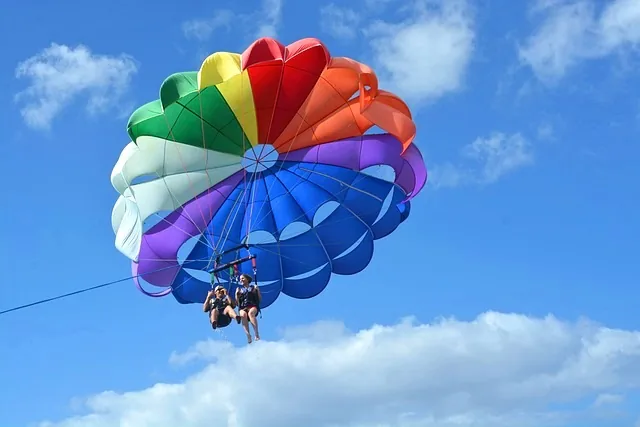
Parasailing is one of the most iconic and exhilarating activities available along Hawaiʻi’s world-famous coastlines. From soaring above the crystal-clear waters of Waikīkī Beach to taking in panoramic views along Maui or Kauaʻi, tourists and residents alike are drawn to the thrill of flying high above the ocean.
While parasailing offers unforgettable experiences, it also comes with inherent risks. When something goes wrong due to equipment failure, operator negligence, unsafe conditions, or another cause, the consequences can be severe. If the parasailing company was negligent in some way, you may be able to pursue a personal injury lawsuit against it, even if you signed a liability waiver.
At Miyashita & O’Steen, we offer compassionate legal representation to individuals hurt in all types of accidents in Hawaiʻi. We have specific experience handling recreation accident lawsuits and understand how to prove liability so that we can hold negligent companies responsible for parasailing and other recreational accidents. Reach out to our law firm today to schedule a free initial consultation with a Hawaiʻi recreation accident lawyer.
Understanding Parasailing Risks
Parasailing involves being harnessed to a parachute, or canopy, that is towed behind a boat. As the boat accelerates, the parasailer is lifted into the air, sometimes reaching heights of several hundred feet.
When conducted properly, parasailing is generally safe. However, there are many risks associated with parasailing, such as:
- Equipment malfunction (towline failure, harness issues)
- Sudden weather changes
- Boat operator error
- Improper takeoff or landing procedures
- Collisions with boats or obstacles
Because participants are suspended high above the water, parasailing accidents can result in serious injuries. These may include fractures, spinal cord injuries, traumatic brain injuries, and even drowning.
In Hawaiʻi, parasailing is usually offered by commercial recreation companies rather than private boat owners. This means that your safety is in the hands of a business and its employees. If you are hurt in a parasailing accident, a Hawaiʻi personal injury lawyer can help you understand your rights and options for pursuing a claim.
Common Causes of Parasailing Accidents
To determine who may be liable for a parasailing accident, it is first important to understand how the accident happened. There are many potential causes of parasailing accidents, including:
- Operator negligence: Parasailing companies are responsible for ensuring passenger safety and adhering to industry standards. Unfortunately, this does not always happen. One of the leading causes of parasailing accidents is operator error. This may include:
- Failure to monitor weather conditions
- Overloading the parasail beyond safe weight limits
- Operating the boat at unsafe speeds
- Inadequate training or supervision
- Equipment failure: Parasailing equipment must be properly maintained and inspected. If equipment is defective or poorly maintained, multiple parties may be liable for any accident. Failures may include:
- Worn or defective towlines
- Faulty harnesses
- Malfunctioning winches
- Hazardous weather conditions: Hawaiʻi’s weather can change rapidly. High winds, sudden storms, or rough waters can create dangerous conditions for parasailing. Operating in unsafe weather conditions may be considered negligence.
- Lack of safety instructions: Participants should receive clear instructions on takeoff, landing, and emergency procedures. Failure to provide adequate guidance can increase the risk of accidents.
If you were in a parasailing accident in Hawaiʻi, a personal injury lawyer can perform a thorough investigation to determine who may be responsible. This is typically the first step in any potential claim against the company or another party.
Who Can Be Held Liable for a Hawaiʻi Parasailing Accident?
Most parasailing accident cases are based on a theory of negligence (carelessness). To establish liability, the accident victim (plaintiff) must prove:
- Duty of care: The at-fault party (defendant) owed the plaintiff a duty to exercise reasonable care.
- Breach: The defendant failed to meet that duty.
- Causation: The breach directly caused the injury.
- Damages: The plaintiff suffered harm as a result.
For example, if a parasailing company allowed a participant to parasail during dangerously high winds and the conditions caused a towline to snap, the company may be found negligent. In this situation, the company could be held financially responsible for any injuries that result.
Determining liability in a Hawaiʻi parasailing accident depends on the specific circumstances of each case. Several parties may be responsible for the accident.
First, the parasailing company is the most common defendant in a personal injury case. These businesses owe a duty of care to their customers, which includes an obligation to maintain equipment, hire and train competent staff, follow safety protocols, and monitor weather conditions. If a company fails in any of these duties, it may be held accountable for a victim’s injuries.
Second, the individual operating the boat plays a critical role in ensuring a safe parasailing experience. Errors such as abrupt maneuvers, excessive speed, or poor judgment can lead to accidents. In some cases, the boat operator may be personally liable, especially if their actions were reckless.
Third, in accidents caused by defective equipment, the manufacturer or distributor may be held liable under product liability laws. This could include design defects, manufacturing defects, or failure to provide adequate warnings. These types of cases can be complex and often require expert analysis.
Fourth, maintenance providers may be liable for a parasailing accident. If the parasailing business employs a third party to inspect and maintain its boats and parasailing equipment, the maintenance provider could be responsible if they fail to complete the job properly.
Finally, a third party may be liable for a parasailing accident. For example, if another boat operator crashes into the boat towing the parasailer, that person could be responsible for the accident. A thorough examination of the facts of the case may reveal other potentially liable parties.
Liability can be complex, particularly in situations where there are multiple parties involved. Our Hawaiʻi recreation accident lawyers are adept at investigating these types of accidents and working to determine who exactly can be held accountable. In this way, we can help our clients pursue full and fair compensation for their injuries.
Are Liability Waivers Enforceable in Hawaiʻi?
Most parasailing companies require participants to sign liability waivers before they can participate in the activity. These waivers are designed to limit the company’s legal responsibility.
However, in Hawaiʻi, waivers are not absolute. While they may protect a company from lawsuits related to the inherent risks of participating in a dangerous activity, they do not cover accidents caused by the company’s negligent, reckless, or intentional conduct.
Under Hawaiʻi law, a liability waiver will not be upheld if:
- The document does not fully and clearly disclose the inherent risks associated with the activity.
- The owner or operator does not take reasonable steps to ensure that each person is physically able to participate receives the instructions necessary to do so safely.
- The company’s negligent, reckless, or intentional behavior led to the accident.
Hawaiʻi courts may carefully scrutinize these waivers, particularly when a person has suffered a serious injury. For this reason, signing a liability waiver will not necessarily bar you from pursuing a lawsuit against a parasailing company.
For example, consider a situation where a parasailing company hired a college student to operate its boat and run parasailing tours but failed to ensure that the student was properly trained in all safety protocols. The employee then failed to properly secure a customer’s safety harness. The harness failed while the customer was in the air, causing the customer to fall into the water and suffer broken bones.
In this case, the parasailing company was negligent in failing to properly train and supervise its employee. The liability waiver would not necessarily protect the company from liability for its own negligence. The victim in this case could file a personal injury lawsuit for their injuries.
It is also important to note that liability waivers are contracts between two parties: the company and the customer. These waivers won’t shield third parties from liability, such as the manufacturer of defective equipment or another boat operator. If your parasailing accident was caused by someone other than the parasailing company, the liability waiver may not apply to that party.
Liability for parasailing accidents is rarely straightforward. If you have been hurt while parasailing in Hawaiʻi, you don’t have to go it alone. Our law firm can help you evaluate your options and pursue justice.
Reach Out for a Free Consultation with an Experienced Hawaiʻi Recreation Accident Lawyer
Parasailing offers a unique and breathtaking way to experience Hawaiʻi’s natural beauty. Unfortunately, parasailing accidents can and do happen, leading to serious or even catastrophic injuries. A skilled Hawaiʻi recreation accident lawyer can help you get justice after a parasailing accident.
Based in Honolulu, Miyashita & O’Steen works with tourists and residents alike who have been hurt in all types of accidents in Hawaiʻi. We won’t back down from a fight or accept a lowball settlement offer. To learn more or to schedule a free initial consultation with a Hawaiʻi recreational accident attorney, give us a call at 808-909-8770 or fill out our online contact form.