
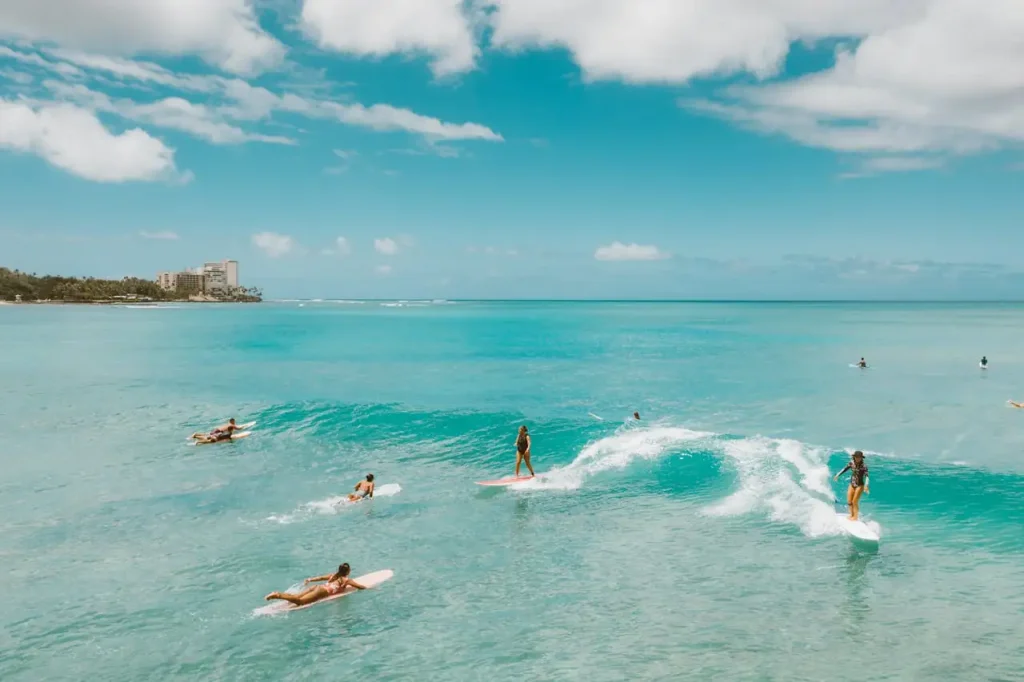
Hawaiʻi is widely regarded as the birthplace of modern surfing. To this day, our state offers some of the most iconic waves in the world. From the legendary swells of the North Shore of Oʻahu to scenic breaks along Maui and Kauaʻi, surfers of all skill levels are drawn to the islands year-round.
While surfing in Hawaiʻi can be an unforgettable experience, it also comes with real risks. Powerful waves, changing ocean conditions, and crowded lineups can quickly turn dangerous, especially for those unfamiliar with local waters. As Hawaiʻi personal injury lawyers, we’ve seen firsthand how preventable accidents can lead to serious injuries. Our guide to surfing safely in Hawaiʻi is designed to help you avoid the risk of accidental injuries.
From our law offices in Honolulu, Miyashita & O’Steen offers high-quality legal representation to clients throughout Hawaiʻi. We handle all types of injury cases, including recreational accident and tourist injury claims. If you have been hurt in any type of accident, reach out to our law firm to schedule a free initial consultation with a Hawaiʻi personal injury attorney.
Tips for Surfing Safely in Hawaiʻi
When it comes to surfing, there are few places in the world quite like Hawaiʻi. Surfing here can be an exhilarating experience. Yet surfing on any of Hawaiʻi’s islands can also be quite dangerous. Our surfing tips can help you stay safe and avoid the risk of accidental injuries.
Understanding Hawaiʻi’s Unique Ocean Conditions
Hawaiʻi’s surf is unlike anywhere else in the world. Waves here are often stronger, faster, and more powerful than those found on the mainland. That’s why it is important to check local conditions before entering the water.
There are several factors to consider when surfing in Hawaiʻi:
- Seasonal swells: Winter months bring large, powerful waves to the north shores (especially on Oʻahu). Summer typically produces calmer conditions on southern shores. Before heading out, always check the surf report and understand what conditions to expect.
- Reef breaks vs. beach breaks: Many surf spots in Hawaiʻi break over coral reefs rather than sand. Reef breaks can be sharp and unforgiving, increasing the risk of cuts, lacerations, and serious injuries.
- Strong currents: Rip currents and undertows are common and can quickly pull even strong swimmers away from shore. If you’re not familiar with ocean dynamics, take time to observe the water before entering.
Choose the Right Surf Spot for Your Skill Level
Not all waves are created equal. Choosing a surfing location that matches your experience is one of the most important safety decisions that you can make.
If you’re a beginner, look for areas that are known for smaller, more manageable waves, such as Waikīkī Beach or the Breakwall at Lāhainā Harbor. These areas often have gentler breaks, though keep in mind that unlike Waikīkī, Lāhainā Harbor does not have lifeguard supervision. If you want guarded waters in West Maui, try Hanakaoʻo Beach Park just to the north.
Because Lāhainā breaks over a shallow, sharp reef, beginners should consider wearing surf booties and taking a lesson from a local surf school to safely navigate the lineup. Finally, if you choose to visit Lāhainā, be sure to practice mālama (care/respect) by staying out of restricted residential rebuild zones and sticking strictly to designated shoreline entry paths.
Experienced surfers may seek out challenging waves, but these areas come with higher risks. Spots along Oʻahu’s North Shore, for example, are known for massive winter swells that can be dangerous, even for professionals.
Never overestimate your ability. Hawaiʻi’s waves demand respect.
Always Check Weather and Surf Reports
Conditions in Hawaiʻi can change quickly. Before heading out, review:
- Wave height and swell direction
- Wind conditions
- Tide levels
- Weather forecasts
Unexpected shifts in weather can create hazardous surf conditions within minutes. There are numerous surf forecasting tools and apps available that provide real-time updates. Local knowledge is also invaluable, so don’t hesitate to ask lifeguards or experienced surfers about current conditions.
Respect Ocean Safety Signs and Lifeguards
Many of Hawaiʻi’s popular beaches are staffed by professional lifeguards. They monitor ocean conditions, provide safety guidance, and respond to emergencies when needed.
To stay safe, however, you still have to make smart choices, such as:
- Follow posted warnings: Signs indicating high surf, strong currents, or dangerous conditions should never be ignored.
- Talk to lifeguards: If you’re unsure about water conditions, ask a lifeguard for advice before entering.
- Swim and surf near lifeguard stations: Staying within designated areas increases your chances of receiving help quickly if needed.
Use the Right Equipment
Proper equipment plays a significant role in surfing safety. This starts with choosing the right board. Beginners should start with larger, more stable boards (such as longboards or foam boards), which are easier to control.
You should also wear a leash to keep your board attached to you. This prevents it from becoming a hazard to others. It can also help you stay afloat.
Finally, consider protective gear. In certain conditions, protective equipment like reef booties, helmets, and rash guards or wetsuits may be helpful.
Learn Proper Surf Etiquette
Surf etiquette isn’t just about courtesy. It is also about safety for everyone out on the water.
Everyone should understand basic surf etiquette, including:
- Right of way: The surfer closest to the peak of the wave has the right of way. Dropping in on someone else’s wave can lead to crashes.
- Don’t snake: Cutting in front of another surfer to take a wave is dangerous and disrespectful.
- Hold onto your board: Avoid letting go of your board in crowded areas, as it can strike other surfers.
- Be aware of your surroundings: Always keep an eye on other surfers, swimmers, and obstacles in the water.
Know Your Limits
One of the most common causes of surfing injuries is overconfidence. Even if you’re an experienced surfer elsewhere, Hawaiʻi’s waves can be significantly more powerful. Always start small. If you’re unfamiliar with local conditions or new to surfing, you should consider taking lessons from a qualified instructor.
You should also rest when needed. Surfing can be quite the workout. Fatigue can impair judgment and reaction time, increasing the risk of accidents.
Be Aware of Marine Life
Hawaiʻi’s waters are home to diverse marine life. While most encounters are harmless, it’s important to remain cautious. Common marine hazards include sea urchins (sharp spines), jellyfish (stings), and coral reefs (cuts and abrasions).
While shark encounters are rare, they do occur in Hawaiʻi. Avoid surfing at dawn or dusk, and stay out of the water if there are warnings posted.
Watch for Rip Currents
Rip currents are powerful channels of water that can pull you away from shore. You may be able to spot a rip current by looking for a break in incoming waves with darker, deeper-looking water. In a rip current, foam or debris will move seaward instead of toward the shore.
If you are caught in a rip current, stay calm. Do not swim directly against the current. Instead, swim parallel to the shore until you can escape the current.
Surf with a Buddy
Surfing alone can increase your risk of being in a surf accident, especially in unfamiliar locations. With a surf partner, you can watch out for each other. Someone can also call for help if needed, adding an extra layer of safety in emergencies.
If you’re visiting Hawaiʻi, consider joining a group lesson or surfing in areas with other surfers present. Avoid surfing alone, especially in unfamiliar conditions.
Stay Hydrated and Protect Yourself from the Sun
Hawaiʻi’s tropical climate can be intense. Prolonged exposure to the sun can lead to both dehydration and heat-related illness.
To stay safe, you should apply (and re-apply!) reef-safe sunscreen. Always wear protective clothing, and take breaks in the shade. You should also drink plenty of water before and after surfing to maintain energy and focus.
Can I File a Lawsuit for a Surfing Accident?
Most surf accidents don’t lead to legal liability. Surfing is an inherently dangerous activity. You generally assume the risk of being hurt if you choose to surf.
However, exceptions may apply when someone else’s negligent, reckless, or intentional conduct directly causes an injury. Examples include:
- Collisions caused by reckless behavior
- Faulty rental equipment
- Inadequate instructions from surf schools
While you may be tempted to write off a surf accident as nothing more than bad luck, it may be possible to bring a claim against someone who caused your injuries. Our Hawaiʻi personal injury lawyers can work with you to help you pursue full and fair compensation for your medical expenses, pain and suffering, lost wages, and other losses.
Experienced Legal Representation for Hawaiʻi Accident Victims
Surfing can be a rewarding way to experience Hawaiʻi, but it also carries real risks. Following these safety tips can help reduce the risk of being hurt while catching a wave.
While surfing accidents don’t always lead to liability, our law firm is ready to help if you believe that your injuries were caused by another person. At Miyashita & O’Steen, we closely analyze each and every case to determine whether you may have a viable legal claim. We offer free consultations and never charge a fee unless we recover money for you. To learn more or to schedule an appointment with a Hawaiʻi recreational accident lawyer, give us a call at 808-909-8770 or fill out our online contact form.