
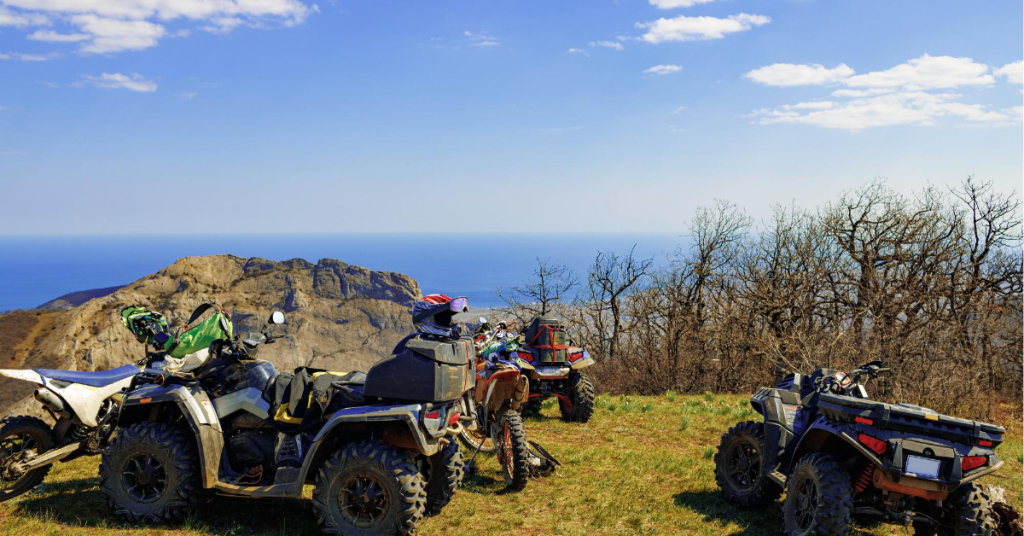
Exploring Hawaiʻi by all-terrain vehicle (ATV) can be an unforgettable experience. Each year, many visitors to Hawaiʻi sign up for guided ATV tours to explore rugged backcountry trails, scenic coastal landscapes, and lush valleys. These tours promise adventure and breathtaking views, but rarely advertise the risks of engaging in this type of activity.
Unfortunately, ATV tour accidents can and do happen in Hawaiʻi. Riders may collide with an obstacle, lose control on steep terrain, or get hurt because of mechanical injuries. Even if you signed a liability waiver, you may be able to file a lawsuit against the tour operator if their negligence caused your injuries. Our Hawaiʻi recreational activity lawyers can help you get maximum compensation for your injuries.
Based in Honolulu, Miyashita & O’Steen advocates for the rights of clients throughout Hawaiʻi (and tourists) who have been hurt in all types of accidents. We understand how to address issues like liability waivers and get our clients the money that they deserve for their injuries. Contact our law offices today to schedule a free consultation with a Hawaiʻi personal injury attorney.
The Popularity (and Dangers) of ATV Tours in Hawaiʻi
Hawaiʻi’s diverse landscape makes it an ideal place for an off-road adventure. ATV tours allow visitors to explore places that may otherwise be difficult to reach by foot or by motor vehicles. ATV tour companies operate on multiple islands, guiding groups through forest trails, valleys, or private ranches.
While these tours can be both exciting and memorable, they involve powerful off-road vehicles, often operated on rough terrain. This raises the risk of accidents and injuries.
ATV tour accidents can occur for many reasons. In some cases, the rider may simply lose control on uneven terrain. In other situations, the accident may be directly related to the tour company’s negligence (carelessness).
Common causes of ATV accidents in Hawaiʻi include:
- Inadequate training or safety briefings: ATVs can be difficult to operate, especially for novices. Tour companies should provide clear instructions on vehicle operation, braking and turning, maintaining safe distances, and handling hills and slopes. If participants receive minimal instruction before being sent out onto challenging terrain, it may increase the likelihood of an accident.
- Poorly maintained vehicles: ATVs owned by tour companies typically experience heavy use. Without proper maintenance, mechanical problems can arise. This may include things like faulty brakes, worn tires, engine malfunctions, or steering problems. If an ATV crashes because of a mechanical failure that should have been detected and fixed during routine maintenance, the tour company may be responsible for any injuries that result.
- Dangerous trail conditions: Tour operators should carefully evaluate the trails that they use for tours. Hazards like steep drop-offs, deep ruts, and unstable terrain can significantly increase the risk of accidents. While off-roading does come with certain inherent risks, companies still have an obligation to avoid unreasonably dangerous routes or warn riders about known hazards.
- Reckless or inexperienced guides: Tour guides play a crucial role in keeping tour groups safe. They are usually responsible for leading the group along designated routes, setting appropriate speeds, and monitoring riders for any safety concerns. If a guide encourages riders to travel too fast for conditions, ignores unsafe conditions, or fails to supervise the group properly, accidents can and do occur.
- Lack of proper safety equipment: Depending on the specifics of a tour, safety gear may include helmets, eye protection, gloves, and other protective clothing. A failure to provide appropriate equipment (or to require riders to wear it) may increase the severity of injuries suffered in a crash.
An ATV accident can cause serious or even catastrophic injuries. Unlike in other types of motor vehicles, ATV riders have little protection in a crash. This may lead to injuries such as broken bones, head injuries, traumatic brain injuries, spinal cord injuries, severe lacerations, and internal injuries.
When an ATV accident occurs, the injury victim may believe that they cannot pursue a claim because they signed a waiver, because the activity was inherently risky, or because they believe that the accident was their fault. However, in many situations, an ATV accident is the direct result of negligence by the tour operator. Our Hawaiʻi recreational activity attorneys can help you determine your rights after an ATV accident.
Hawaiʻi Law on Liability for Recreational Activity Injuries
In Hawaiʻi, there is a specific law that governs injuries that occur during recreational activities. Under this law, companies that offer recreational activities to the public must exercise reasonable care to ensure the safety of their patrons. If a participant is injured because of a company’s negligent acts or omissions (such as failing to give safety training or to properly maintain the vehicles), the tour operator can be held liable for any injuries that result. Waivers also don’t protect companies from intentional or reckless behavior.
This same law also recognizes that some activities (such as ATV riding) do carry inherent risks. Companies may not be liable for injuries caused by these inherent risks if participants sign a valid waiver acknowledging these risks. This means that not every ATV accident leads to a legal claim. However, under Hawaiʻi law, signing a liability waiver does not automatically mean that you cannot sue a tour company for your injuries.
Before participating in an ATV tour, people are usually asked to sign a liability waiver. Signing a waiver is typically required before you can participate. These legal documents often state that ATV riding involves inherent risks, the participant accepts those risks, and the participant agrees not to sue the tour operator for certain injuries.
Waivers can be enforceable when an injury results from the ordinary risks associated with an injury. For example, if you experience bruises and soreness after an ATV tour, that would be considered an ordinary risk of riding an off-road vehicle over uneven terrain. However, if you broke several bones in a rollover accident when your ATV flipped on a steep incline, that may not fall within the bounds of the waiver.
Liability waivers do not protect tour companies from their own negligence. If a tour operator does not act with reasonable care to protect the safety of participants, then you can still file a lawsuit to recover money for your losses.
In some cases, liability for an ATV accident is clear. For example, if the brakes on your ATV fail because the tour company didn’t maintain the equipment, then you can almost certainly pursue a lawsuit for injuries suffered in an accident.
In other situations, it can be difficult to determine who may be liable for an accident. For example, consider a situation where a person is injured after losing control of their ATV when riding at a high rate of speed. This accident might have been their own fault if they had ignored the safety training and the tour guide, because they wanted to go fast. But if the tour company didn’t give adequate safety training or if the guide didn’t pay attention to participants during the tour, the company could be liable.
Importantly, Hawaiʻi courts may decline to enforce some recreational activity waivers. If the waiver is unclear, misleading, or not presented properly to tour participants, the court may not determine that it is invalid. This is another way that you could potentially file a claim for an ATV accident in Hawaiʻi.
After an ATV tour accident, you might believe that you are simply out of luck because you signed a waiver. You might also be unsure of your rights if you don’t live in Hawaiʻi and have to return to the mainland. It is important to understand that you do have rights, even if you signed a waiver.
If your ATV accident was caused by the tour company’s negligent, reckless, or intentional conduct, you can file a personal injury lawsuit against them even if you signed a waiver. You can also potentially pursue a claim if the waiver wasn’t properly written or presented to you. Our Hawaiʻi recreational activity lawyers can analyze your situation and help you determine what your options are for pursuing a claim.
Help for ATV Tour Accident Victims Across Hawaiʻi
ATV tours can be a great way to experience Hawaiʻi, allowing you to see parts of the islands that you simply can’t access by car (or even by foot). Yet at the same time, riding an ATV can be incredibly dangerous. Even if you signed a waiver with the tour company, you may still be able to file a lawsuit for an ATV tour accident. Our law firm can help.
Miyashita & O’Steen offers experienced legal representation to individuals who have been hurt in recreational accidents in Hawaiʻi. We understand the complexities of Hawaiʻi law when it comes to waivers, and work hard to help our clients get the money that they deserve for their medical bills, lost wages, pain and suffering, and more. To learn more or to schedule a free initial consultation with a Miyashita & O’Steen recreational accident attorney, give us a call at 808-909-8770 or fill out our online contact form.